

Discover how leadership meditation can enhance focus, emotional intelligence, and decision-making. Learn practical techniques to become a mindful and effective leader.
Overview
In today’s fast-paced world, effective leadership requires more than just strategy and technical skills. Emotional intelligence, focus, clarity, and resilience are equally essential. This is where leadership meditation comes into play. In this blog, readers will learn what leadership meditation is, its benefits, practical techniques, and how integrating mindfulness into daily routines can enhance leadership performance. By the end of this post, you will understand how to cultivate a mindful approach to leadership that improves decision-making, team dynamics, and personal well-being.
What Is Leadership Meditation?
Leadership meditation is a specialized form of mindfulness practice designed for leaders who want to strengthen their mental clarity, emotional resilience, and decision-making skills. Unlike traditional meditation, which may focus on relaxation or stress reduction, leadership meditation emphasizes cultivating qualities essential for effective leadership:
- Awareness of your own thoughts and emotions
- Empathy and understanding toward others
- Strategic thinking and problem-solving
- Presence and focus under pressure
Through regular practice, leaders can learn to respond thoughtfully rather than react impulsively, making better decisions and inspiring their teams more effectively.

The Key Benefits of Leadership Meditation
Implementing leadership meditation in your daily routine offers tangible benefits for both personal growth and professional performance:
1. Improved Focus and Concentration
Meditation trains the mind to stay present, reducing mental distractions. Leaders who practice meditation are better equipped to focus on priorities, make strategic decisions, and manage complex tasks without feeling overwhelmed.
2. Enhanced Emotional Intelligence
Mindfulness meditation encourages self-awareness and emotional regulation. This skill allows leaders to understand their own reactions, empathize with team members, and handle conflicts more effectively.
3. Stress Reduction and Resilience
Leadership roles often come with high levels of stress. Meditation helps reduce cortisol levels, leading to better stress management, improved resilience, and sustained energy throughout the workday.
4. Better Decision-Making
By cultivating a calm, clear mind, leadership meditation helps leaders make thoughtful, data-informed decisions rather than being swayed by emotions or external pressures.
5. Improved Team Dynamics
Leaders who practice mindfulness are more present and engaged with their teams. This fosters trust, encourages collaboration, and enhances overall team performance.
How Leadership Meditation Works
Leadership meditation works by combining the core principles of mindfulness with leadership-specific practices. Here’s how it typically functions:
Awareness Practices
Leaders learn to observe their thoughts, emotions, and reactions without judgment. This heightened awareness allows them to recognize biases, habitual reactions, and stress triggers.
Visualization Techniques
Visualization exercises are often used in leadership meditation to mentally rehearse challenging situations, improving confidence and clarity when faced with real-life scenarios.
Breathing Exercises
Controlled breathing helps calm the nervous system, reduce stress, and enhance focus. Many leadership meditation techniques emphasize breathwork before decision-making or team meetings.
Reflection and Journaling
After meditation sessions, reflection and journaling help leaders identify insights, track progress, and reinforce mindful behaviors in their daily routines.
Practical Leadership Meditation Techniques
Here are some practical exercises to integrate leadership meditation into your daily life:
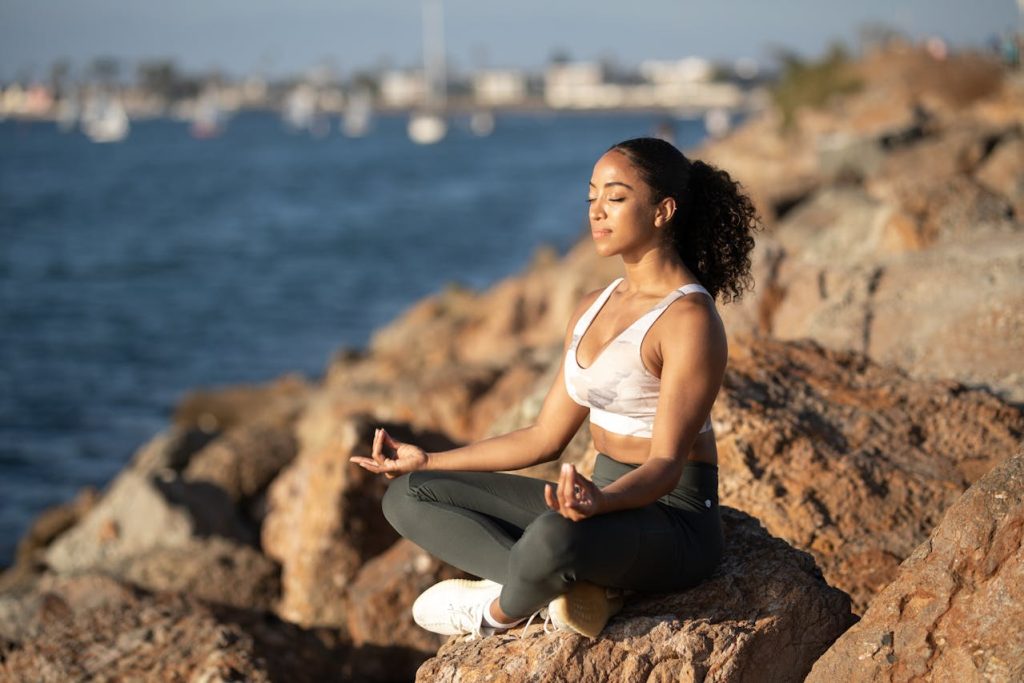
1. Mindful Breathing (5–10 Minutes)
- Sit comfortably with your spine straight.
- Close your eyes and focus on your breath.
- Inhale deeply, hold for 2–3 seconds, and exhale slowly.
- If your mind wanders, gently bring your focus back to your breath.
Benefit: Improves focus, reduces stress, and creates a calm baseline for decision-making.
2. Visualization for Leadership Clarity
- Imagine yourself in a challenging leadership scenario.
- Visualize handling it with confidence, clarity, and empathy.
- Notice the emotions, thoughts, and actions involved.
Benefit: Enhances confidence and prepares you mentally for real-life leadership challenges.
3. Emotional Check-In (2–5 Minutes)
- Pause during the day to identify your current emotional state.
- Acknowledge your emotions without judgment.
- Reflect on how your emotional state may impact your leadership decisions.
Benefit: Strengthens emotional intelligence and self-awareness.
4. Mindful Listening Exercises
- Practice fully listening to team members without interrupting.
- Focus on understanding their perspective instead of preparing a response.
Benefit: Builds trust, empathy, and improves team communication.
5. Gratitude Meditation
- Take a moment each day to focus on what you are grateful for in your team and work environment.
- Silently acknowledge each person’s contribution and positive aspect of your leadership role.
Benefit: Enhances positivity, team morale, and overall workplace satisfaction.
Integrating Leadership Meditation Into Daily Life
Consistency is key to experiencing the full benefits of leadership meditation. Here are strategies to incorporate it into your routine:
- Morning Routine: Begin the day with 10–15 minutes of mindful meditation to set intentions and focus for the day.
- Pre-Meeting Meditation: Take 2–3 minutes to center yourself before important meetings or presentations.
- Stress Moments: Use breathing exercises during high-pressure moments to maintain clarity and composure.
- Evening Reflection: Spend 5–10 minutes reflecting on your leadership decisions and emotions before ending the day.
Why Companies Should Encourage Leadership Meditation
Organizations are increasingly recognizing the value of mindfulness for leadership. Incorporating leadership meditation into corporate culture can lead to:
- Reduced workplace stress and burnout
- Improved executive decision-making
- Enhanced communication and collaboration
- Increased overall productivity and morale
Leaders who practice meditation model mindfulness for their teams, creating a healthier and more effective work environment.
Real-World Examples of Leadership Meditation
Many successful leaders and executives attribute their success to mindfulness practices:
- Bill George (Former CEO of Medtronic): Advocates daily mindfulness to maintain clarity and purpose.
- Marc Benioff (Salesforce CEO): Practices meditation to enhance focus and creativity.
- Arianna Huffington (Founder of Thrive Global): Promotes mindfulness for stress reduction and emotional well-being.
These examples demonstrate that leadership meditation isn’t just theory—it produces tangible results in high-pressure environments.
Final Thoughts
Leadership is as much about mindset as it is about skills and strategy. By practicing leadership meditation, leaders can:
- Make better decisions under pressure
- Improve emotional intelligence
- Reduce stress and increase resilience
- Foster stronger team dynamics
Mindfulness is a skill that grows over time, and with consistent practice, it can transform not only your leadership style but also your overall effectiveness and satisfaction as a leader.
Start integrating leadership meditation into your routine today and experience the profound impact of a mindful approach to leadership.
FAQs for Leadership Meditation
What is leadership meditation?
Leadership meditation is a mindfulness practice specifically designed to help leaders improve focus, emotional intelligence, decision-making, and resilience in professional settings.
How does leadership meditation improve decision-making?
By calming the mind and reducing stress, leadership meditation allows leaders to respond thoughtfully rather than react impulsively, leading to better, more strategic decisions.
Can beginners practice leadership meditation?
Yes! Leadership meditation is accessible to beginners. Starting with short daily sessions, such as 5–10 minutes, helps build consistency and mindfulness gradually.
How long should I meditate for leadership benefits?
Even 10–15 minutes daily can produce noticeable improvements in focus, emotional regulation, and overall leadership performance.
What are the key benefits of leadership meditation?
Benefits include enhanced focus, emotional intelligence, stress reduction, better decision-making, stronger team dynamics, and increased resilience.
Can leadership meditation reduce workplace stress?
Absolutely. By practicing mindfulness, leaders can lower stress hormones, improve emotional control, and maintain calm in high-pressure situations.
Which meditation techniques are best for leaders?
Effective techniques include mindful breathing, visualization, emotional check-ins, mindful listening, and gratitude meditation.
How often should I practice leadership meditation?
Consistency is crucial. Daily practice, even in short sessions, is more effective than occasional longer sessions.
Can leadership meditation improve team relationships?
Yes. Mindful leaders are more empathetic, attentive, and better listeners, which strengthens trust, collaboration, and communication within teams.
Is leadership meditation suitable for executives?
Definitely. Many executives use leadership meditation to maintain focus, clarity, and resilience in high-pressure corporate environments.
Can leadership meditation boost creativity?
Yes. By quieting mental clutter, leaders can access creative insights, problem-solving ideas, and innovative strategies.
Do I need a teacher to practice leadership meditation?
While guidance can help, leadership meditation can be practiced independently with online resources, guided meditations, or self-reflection techniques.
Can leadership meditation improve emotional intelligence?
Yes. Mindfulness helps leaders become aware of their emotions, regulate reactions, and empathize with team members, strengthening overall emotional intelligence.
How quickly can I see results from leadership meditation?
Some benefits, like reduced stress and improved focus, can be felt within a few sessions. Long-term improvements in decision-making and emotional intelligence develop over weeks and months.
Can leadership meditation help during high-pressure situations?
Absolutely. Practicing mindfulness equips leaders with the ability to stay calm, think clearly, and respond strategically under stress.
Related Topics
- Articles on Mindfulness: Power of Meditation for Daily Life
- What Does Mindfulness Mean? Understanding Its Benefits
- What Is Being Mindfulness? A Complete Guide to Mindful Living
- Walking Mindfulness Meditation: A Simple Path to Inner Peace
- Mindfulness Body Scan Meditation: A Complete Guide
- Workplace Mindfulness: Improve Focus & Productivity
- Meditation Methods for Beginners | Start Your Mindfulness Journey
- What Does Being Mindful Mean? A Complete Guide to Mindfulness
- Definition of Mindfulness? Meaning, Benefits & Practice
- Mindfulness for the Workplace: Boost Productivity & Well-being
- Breath Meditation: A Complete Guide to Mindfulness & Relaxation
- Mastering the Art of Having Patience: A Mindfulness Approach
- Mindfulness Meditation for Anxiety: Calm Your Mind
- Self Meditating: A Complete Guide to Practicing Mindfulness
- Mindfulness for Grief: Find Peace Through Mindful Awareness
- Meditation and Sounds: Boost Mindfulness & Relaxation
- Emotion Mindfulness: Techniques to Manage Your Feelings
- Daily Mindfulness: How to Transform Your Life