

Discover how self-mirroring can transform your mindfulness practice. Learn practical techniques, benefits, and how to use self-mirroring to improve emotional awareness and inner balance.
Overview
Understanding your thoughts, emotions, and behaviors is one of the most important steps toward personal growth. In the world of mindfulness and meditation, one powerful technique that helps people develop deeper self-awareness is self-mirroring.
Many people go through life reacting automatically to situations without fully understanding why they feel or behave the way they do. Self-mirroring helps break that cycle by allowing you to observe your inner world with clarity and compassion. Through this mindful practice, you begin to recognize patterns, emotional triggers, and beliefs that influence your daily life.
At Mindfulness Meditation Hub, we believe that practices like self-mirroring can support emotional balance, reduce stress, and improve your connection with yourself and others.
What Is Self Mirroring?
Self-mirroring is a mindfulness practice that involves observing your thoughts, emotions, behaviors, and reactions as if you were watching yourself from the outside.
Instead of judging yourself or suppressing emotions, self-mirroring encourages you to
- Notice your internal responses
- Reflect on your behavior
- Understand your emotional triggers
- Recognize patterns in your thoughts
In simple terms, self-mirroring means becoming both the observer and the participant in your own life.
This technique is often used in mindfulness practices because it helps individuals slow down and gain awareness of what is happening inside their minds.

Why Self-Mirroring Is Important for Personal Growth
Many people struggle with emotional reactions they don’t fully understand. Without awareness, these reactions can affect relationships, decision-making, and mental health.
Practicing self-mirroring can help you identify the root cause of these responses.
Key reasons self-mirroring is valuable include the following:
- Increasing self-awareness
- Improving emotional intelligence
- Developing healthier reactions to stress
- Strengthening mindfulness practice
- Encouraging personal reflection and growth
When you regularly practice self-mirroring, you begin to see your habits and thought patterns more clearly. This awareness allows you to make conscious choices rather than reacting automatically.
How Self Mirroring Works in Mindfulness
Mindfulness teaches us to observe our thoughts without judgment. Self-mirroring applies the same principle but focuses specifically on self-reflection.
When practicing self-mirroring, you essentially pause and ask yourself:
- What am I feeling right now?
- Why am I reacting this way?
- What thought triggered this emotion?
- Is my reaction helpful or harmful?
Instead of pushing emotions away, self-mirroring allows you to examine them with curiosity and compassion.
This mindful observation creates space between your emotions and your reactions, which is essential for emotional regulation.
The Psychological Benefits of Self-Mirroring
Research in mindfulness and psychology suggests that self-reflection practices can improve emotional well-being. Self-mirroring offers several important benefits.
1. Increased Self-Awareness
One of the biggest advantages of self-mirroring is that it helps you understand yourself better.
When you regularly observe your thoughts and emotions, you begin to notice:
- Behavioral patterns
- Emotional triggers
- Automatic responses
- Repetitive thought cycles
This awareness is the foundation of personal growth.
2. Better Emotional Regulation
Emotions can sometimes feel overwhelming. Self-mirroring helps you slow down and understand what you are experiencing before reacting.
Instead of reacting impulsively, you learn to
- Pause
- Reflect
- Respond thoughtfully
Over time, self-mirroring improves emotional balance and resilience.
3. Reduced Stress and Anxiety
Mindfulness practices like self-mirroring can significantly reduce stress.
By observing your thoughts rather than becoming consumed by them, you gain perspective.
This helps you:
- Let go of negative thought loops
- Reduce emotional overwhelm
- Stay present in the moment
4. Improved Relationships
When you understand your own emotional patterns, you become better at communicating with others.
Self-mirroring helps you recognize how your reactions affect people around you. As a result, you can respond with greater empathy and awareness.
Practical Ways to Practice Self-Mirroring
If you’re new to mindfulness, you might wonder how to begin practicing self-mirroring. The good news is that it can be integrated easily into your daily routine.
Here are several simple techniques.
1. Mindful Observation
Take a few minutes each day to quietly observe your thoughts and emotions.
Ask yourself:
- What am I feeling right now?
- What caused this feeling?
- How is my body reacting?
This basic mindfulness exercise strengthens your ability to practice self-mirroring naturally.
2. Journaling for Self-Reflection
Writing down your thoughts can be a powerful self-mirroring tool.
Try reflecting on:
- Situations that triggered strong emotions
- How you reacted
- What you learned from the experience
Journaling helps you see patterns that may not be obvious in the moment.
3. Meditation Practice
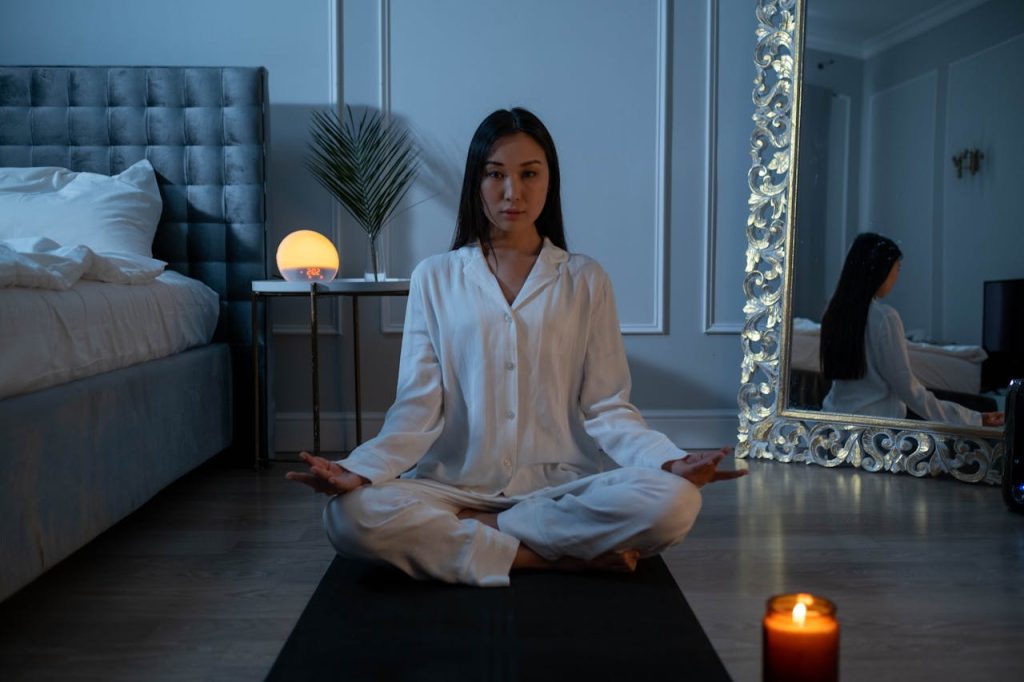
Meditation is one of the most effective ways to develop self-mirroring.
During meditation, you observe your thoughts as they arise and pass without judgment.
Over time, this strengthens your ability to recognize emotional reactions in daily life.
4. Mirror Reflection Exercise
A literal mirror exercise can also support self-mirroring.
Stand in front of a mirror and ask yourself reflective questions such as:
- What am I feeling today?
- What do I need right now?
- Am I being kind to myself?
This simple practice helps you build a deeper connection with yourself.
How Self-Mirroring Supports Mindfulness Meditation
Mindfulness meditation and self-mirroring work together to deepen awareness.
Meditation trains your mind to observe thoughts without reacting immediately. When combined with self-mirroring, this awareness extends beyond meditation sessions into everyday life.
For example, during a stressful moment, you may notice:
- Your breathing becoming faster
- Tension in your body
- Negative thoughts forming
Through self-mirroring, you can pause, recognize these signals, and choose a calmer response.
This is why mindfulness teachers often encourage reflective practices alongside meditation.
Common Challenges When Practicing Self-Mirroring
While self-mirroring is powerful, it can feel uncomfortable at first.
Many people struggle with:
- Facing difficult emotions
- Letting go of self-judgment
- Staying consistent with reflection
Remember that mindfulness is not about perfection. The goal of self-mirroring is simply to observe your experience with honesty and compassion.
Over time, the practice becomes easier and more natural.
Tips to Improve Your Self-Mirroring Practice
To get the most from self-mirroring, consider these helpful tips:
Be patient with yourself.
Self-awareness takes time. Growth happens gradually.
Practice Regularly.
Consistency strengthens mindfulness habits.
Avoid Self-Criticism
Observe your thoughts without judging them.
Combine with meditation.
Mindfulness meditation deepens the effectiveness of self-mirroring.
Focus on Curiosity
Approach your emotions with curiosity rather than resistance.
How Mindfulness Meditation Hub Supports Your Journey
At Mindfulness Meditation Hub, our goal is to make mindfulness accessible to everyone.
Our resources help individuals develop practices like self-mirroring so they can:
- Understand their thoughts and emotions
- Build inner calm and clarity
- Reduce stress and overwhelm
- Create healthier habits and relationships
Through guided techniques, educational content, and mindfulness insights, we support people on their journey toward greater awareness and well-being.
Final Thoughts
Developing deeper self-awareness is one of the most meaningful steps toward emotional well-being. Self-mirroring offers a simple yet powerful way to observe your inner world and understand how your thoughts and reactions shape your life.
By practicing self-mirroring, you learn to pause, reflect, and respond with greater mindfulness. Over time, this leads to stronger emotional balance, clearer thinking, and a deeper connection with yourself.
When combined with mindfulness meditation, self-mirroring becomes a transformative tool for personal growth and inner peace.
FAQs for Self Mirroring
What is self mirroring in mindfulness?
Self mirroring is a mindfulness practice where individuals observe their own thoughts, emotions, and behaviors as if they were watching themselves from the outside. This helps develop greater self-awareness and emotional understanding.
How does self mirroring improve self-awareness?
Self mirroring improves self-awareness by helping you notice patterns in your thoughts and reactions. By observing your behavior without judgment, you can better understand why you respond to certain situations.
Is self mirroring a form of meditation?
Self mirroring is closely related to mindfulness meditation. While meditation focuses on observing thoughts and breathing, self mirroring specifically focuses on reflecting on your emotional responses and behaviors.
What are the benefits of practicing self mirroring?
Practicing self mirroring can provide many benefits, including improved emotional awareness, reduced stress, better decision-making, stronger relationships, and enhanced personal growth.
Can beginners practice self mirroring?
Yes, beginners can easily practice self mirroring. It only requires taking time to reflect on your thoughts and emotions and observing them with curiosity rather than judgment.
How often should I practice self mirroring?
You can practice self mirroring daily. Even a few minutes of mindful reflection each day can help you become more aware of your thoughts, emotions, and reactions.
What is the difference between self reflection and self mirroring?
Self reflection involves thinking about past experiences, while self mirroring focuses on observing your current emotions and reactions in real time.
Can self mirroring help reduce stress?
Yes, self mirroring can reduce stress by helping you recognize emotional triggers and respond to them calmly rather than reacting impulsively.
How does self mirroring support emotional intelligence?
Self mirroring helps you understand your emotions and reactions more clearly. This awareness allows you to manage emotions better and respond more thoughtfully in different situations.
Is journaling a form of self mirroring?
Yes, journaling can be a powerful self mirroring practice. Writing about your thoughts and emotions helps you observe patterns and gain insights about your behavior.
Can self mirroring improve relationships?
Self mirroring can improve relationships because it helps you understand your reactions and communication patterns, making it easier to respond with empathy and awareness.
How long does it take to see results from self mirroring?
Many people begin noticing improvements in awareness and emotional control within a few weeks of practicing self mirroring regularly.
Can self mirroring be practiced during meditation?
Yes, meditation is one of the best ways to practice self mirroring because it trains the mind to observe thoughts and emotions without judgment.
Why is self mirroring important for personal growth?
Self mirroring allows you to recognize habits, beliefs, and emotional triggers that influence your behavior. This awareness helps you make conscious changes for personal development.
Where can I learn more about mindfulness and self mirroring?
You can learn more about mindfulness techniques and practices like self mirroring through resources, guides, and articles available on Mindfulness Meditation Hub.
Related Topics
- Articles on Mindfulness: Power of Meditation for Daily Life
- What Does Mindfulness Mean? Understanding Its Benefits
- What Is Being Mindfulness? A Complete Guide to Mindful Living
- Walking Mindfulness Meditation: A Simple Path to Inner Peace
- Mindfulness Body Scan Meditation: A Complete Guide
- Workplace Mindfulness: Improve Focus & Productivity
- Meditation Methods for Beginners | Start Your Mindfulness Journey
- What Does Being Mindful Mean? A Complete Guide to Mindfulness
- Definition of Mindfulness? Meaning, Benefits & Practice
- Mindfulness for the Workplace: Boost Productivity & Well-being
- Breath Meditation: A Complete Guide to Mindfulness & Relaxation
- Mastering the Art of Having Patience: A Mindfulness Approach
- Mindfulness Meditation for Anxiety: Calm Your Mind
- Self Meditating: A Complete Guide to Practicing Mindfulness
- Mindfulness for Grief: Find Peace Through Mindful Awareness
- Meditation and Sounds: Boost Mindfulness & Relaxation
- Emotion Mindfulness: Techniques to Manage Your Feelings
- Daily Mindfulness: How to Transform Your Life