

Discover how boredom meditation can transform restless moments into calm, focus, and self-awareness with simple mindfulness techniques you can practice anywhere.
Feeling bored can seem like something you simply need to escape. You reach for your phone, open another app, turn on a video, or look for something to fill the silence. But what if boredom could become an opportunity instead?
Boredom meditation offers a different approach. Rather than immediately distracting yourself, you learn to notice boredom with curiosity and awareness. The goal isn’t to force yourself to enjoy an uncomfortable moment. Instead, you practice observing your thoughts, emotions, physical sensations, and impulses without automatically reacting to them.
For people who are new to mindfulness, this can be a surprisingly useful way to begin. Boredom happens naturally throughout everyday life, which means you don’t need a special location or complicated routine to practice.
At MindfulnessMeditationHub.com, we provide practical resources, exercises, and mindfulness techniques to help you explore meditation and incorporate these practices into daily life. Whether you’re just starting out or have been practicing for years, our resources are designed to support your personal mindfulness journey.
What Is Boredom Meditation?
Boredom meditation is a mindfulness practice in which you intentionally observe the experience of boredom rather than immediately trying to eliminate it.
During a typical meditation session, you might focus on your breathing, body sensations, sounds, or thoughts. With this practice, boredom itself becomes the object of attention.
You might notice:
- Restlessness in your body
- A desire to check your phone
- Thoughts such as “This is pointless”
- Impatience
- Difficulty sitting still
- A sense that time is moving slowly
- An urge to find something entertaining
Instead of judging these experiences, you observe them.
The important distinction is that meditation isn’t about making boredom disappear. It’s about developing the ability to remain aware when your mind wants immediate stimulation.

Why Does Boredom Feel So Uncomfortable?
Boredom isn’t simply the absence of entertainment. It can involve thoughts, emotions, physical restlessness, and a strong desire for change.
Modern life also makes constant stimulation extremely easy. Smartphones, social media, streaming platforms, games, notifications, and endless online content can provide something to focus on almost instantly.
As a result, ordinary quiet moments may feel unusually uncomfortable.
For example, imagine you’re waiting for an appointment. You have five minutes with nothing to do. Your hand automatically reaches for your phone.
That moment can become a mindfulness opportunity.
Rather than checking your screen immediately, pause and ask:
“What am I experiencing right now?”
You may discover that the uncomfortable feeling isn’t actually boredom alone. It might include impatience, anxiety, loneliness, tiredness, or simply a desire for stimulation.
Mindfulness helps you investigate that experience instead of automatically escaping it.
The Connection Between Boredom and Mindfulness
Mindfulness means paying attention to the present moment with openness and without unnecessary judgment.
Boredom can challenge this ability because the mind often says, “Something else should be happening.”
That thought creates a gap between your current experience and what you believe should be happening.
Mindfulness helps close that gap.
Instead of thinking:
“I shouldn’t be bored.”
You can practice:
“I’m noticing boredom right now.”
That small change in perspective can make the experience easier to understand.
Boredom Can Become an Object of Awareness
Meditation teaches you that thoughts and feelings can be observed without immediately being acted upon.
If boredom appears, you don’t necessarily need to fight it.
You can notice:
- Where boredom appears in your body.
- What thoughts accompany it.
- What emotions are present.
- What you want to do in response.
- Whether the experience changes when you simply observe it.
This develops a valuable mindfulness skill: responding rather than automatically reacting.
Benefits of Practicing With Boredom
Learning to sit with boredom may provide several practical benefits as part of a broader mindfulness practice.
1. Greater Self-Awareness
Boredom can reveal patterns that are easy to overlook.
You may discover that you reach for your phone whenever you feel uncomfortable, uncertain, lonely, or mentally tired.
Once you notice the pattern, you have more choice about what to do next.
2. Improved Attention
Constant stimulation can make sustained attention feel difficult.
Mindfulness exercises encourage you to repeatedly return your attention to the present experience.
Even when your mind wanders, noticing that it wandered and gently returning is part of the practice.
3. Better Emotional Tolerance
Not every uncomfortable feeling needs to be immediately removed.
Practicing awareness during boring moments can help you become more familiar with temporary discomfort.
This doesn’t mean you should tolerate situations that are genuinely harmful or overwhelming. It simply means that ordinary discomfort doesn’t always require an immediate distraction.
4. Less Automatic Distraction
Consider how often you unlock your phone without consciously deciding to do so.
A short mindfulness pause can create space between the urge and the action.
That space is important.
5. More Appreciation for Ordinary Moments
When you stop demanding constant stimulation, simple experiences can become more noticeable.
The sound of rain, a quiet room, a cup of coffee, your breathing, or the feeling of walking can become objects of attention.
Mindfulness isn’t necessarily about making life more exciting.
Sometimes it’s about becoming more present for the life you’re already experiencing.
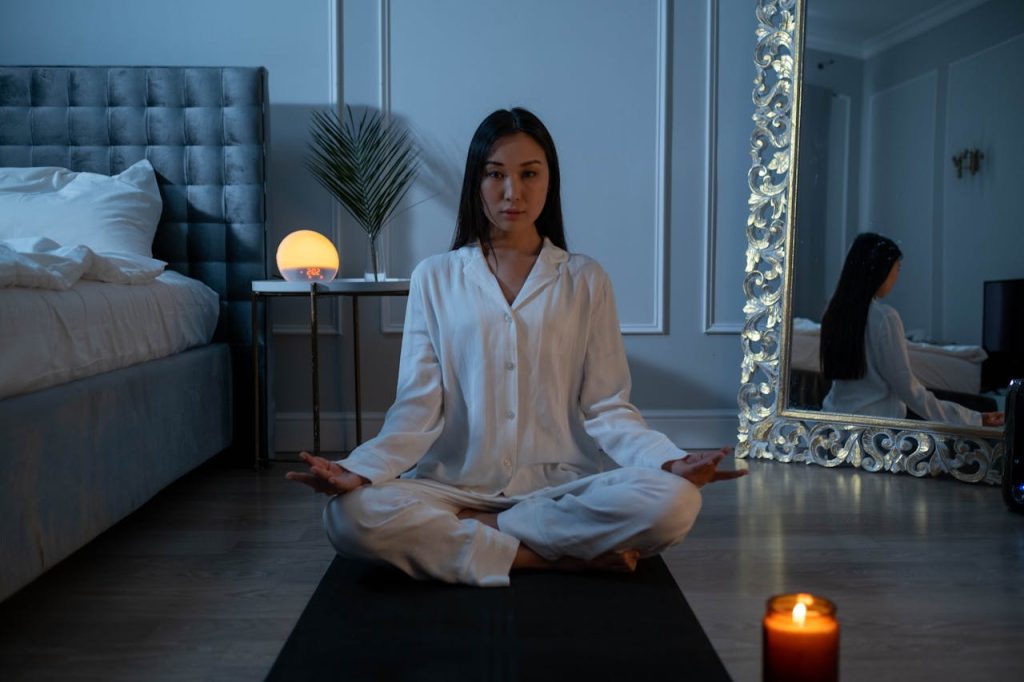
A Simple 10-Minute Practice
You don’t need to meditate for an hour to experiment with this approach.
Try this beginner-friendly exercise.
Minute 1–2: Settle In
Sit comfortably.
Allow your shoulders to relax and let your breathing happen naturally.
You don’t need to control your breath.
Simply notice that you’re breathing.
Minute 3–4: Notice the Environment
Listen to the sounds around you.
Notice temperature, light, physical contact with the chair, and sensations in your hands or feet.
Don’t search for interesting sensations.
Simply notice whatever is already present.
Minute 5–6: Observe the Boredom
Now ask yourself:
“What does boredom feel like right now?”
Don’t try to answer intellectually.
Instead, investigate the experience.
Is there restlessness?
Heaviness?
Impatience?
Mental noise?
A desire to move?
Minute 7–8: Notice the Urges
You may suddenly want to check your phone, stand up, change position, or end the exercise.
Notice the urge.
You don’t have to obey it immediately.
Think of it as watching a wave rise and fall.
Minute 9: Return to the Present
Bring attention back to your breathing.
Notice one complete inhale and one complete exhale.
If thoughts appear, acknowledge them and return.
Minute 10: Reflect
Before finishing, ask:
- What did I notice?
- Did the feeling of boredom change?
- What thoughts appeared?
- What did I want to do?
- Was the experience different when I stopped fighting it?
There is no correct answer.
The purpose is observation.
What If You Can’t Stop Thinking?
That’s completely normal.
Meditation doesn’t require an empty mind.
Your mind may produce thoughts about work, relationships, responsibilities, memories, plans, or random topics.
The practice is noticing those thoughts.
For example:
Thought: “This is taking forever.”
Mindful response: “I’m noticing impatience.”
Then return your attention to your chosen object of awareness.
You don’t need to argue with the thought.
You don’t need to suppress it.
You simply recognize it and return.

Boredom Meditation vs. Traditional Meditation
There are many forms of meditation, and they don’t all use the same object of attention.
| Practice | Common Focus |
|---|---|
| Breath meditation | Breathing |
| Body scan | Physical sensations |
| Loving-kindness meditation | Compassion and goodwill |
| Walking meditation | Movement and bodily awareness |
| Mindfulness meditation | Present-moment experience |
These approaches aren’t competing systems.
You can use boredom as an entry point and then incorporate other mindfulness techniques into your routine.
For instance, if boredom becomes overwhelming, you might return to the breath. If you notice strong physical sensations, you might explore a body scan.
The goal is flexibility and awareness.
How to Practice During Everyday Life
Formal meditation isn’t the only way to work with boredom.
You can practice mindfulness during ordinary situations.
While Waiting
Instead of immediately opening your phone, notice your breathing and surroundings.
During a Quiet Commute
If you’re not driving, observe sounds, sensations, and thoughts without automatically filling every moment with content.
Never practice with eyes closed or deliberately disengaged while driving.
During Household Tasks
Washing dishes, folding laundry, or organizing your space can become opportunities to notice movement, sounds, textures, and sensations.
Before Reaching for Your Phone
Pause for one breath.
Ask:
“Do I actually want to use my phone, or am I trying to escape a feeling?”
You can still choose to use it.
The mindfulness practice is simply making the choice consciously.
Common Mistakes Beginners Make
A few misunderstandings can make this practice unnecessarily difficult.
Trying to Eliminate Boredom
The goal isn’t to force boredom away.
Trying to get rid of it can create even more frustration.
Expecting Immediate Calm
Some meditation sessions feel peaceful.
Others feel restless.
Neither experience means you’ve failed.
Judging Yourself
Thinking “I’m terrible at meditation” is just another thought to observe.
Forcing Yourself to Continue
Mindfulness doesn’t mean ignoring legitimate needs.
If you’re physically uncomfortable, in pain, emotionally overwhelmed, or genuinely need to stop, you can stop.
A healthy meditation practice should be approached with self-awareness and reasonable boundaries.
How to Build a Consistent Practice
Consistency matters more than making every session long.
Start with a manageable routine.
Try:
- 5 minutes each morning
- 5 minutes before bed
- One mindful pause during the workday
- A phone-free minute while waiting
- One short body-awareness exercise each afternoon
Once the practice becomes familiar, you can gradually increase the duration.
It can also help to connect meditation with an existing habit.
For example:
After brushing my teeth → 5 minutes of mindfulness.
This creates a clear cue and makes the practice easier to remember.
Who Can Benefit From This Practice?
This approach may be especially interesting for people who:
- Feel uncomfortable during quiet moments
- Constantly seek digital stimulation
- Want to improve present-moment awareness
- Are beginning a mindfulness practice
- Have difficulty sitting still
- Want to understand their habitual reactions
- Want simple meditation exercises for everyday life
However, meditation isn’t a replacement for professional medical or mental health care when such care is needed. If persistent emotional or psychological symptoms are interfering with your daily life, consider speaking with a qualified professional.

Make Boredom a Mindfulness Opportunity
The next time boredom appears, you don’t have to immediately label it as a problem.
Pause.
Take one breath.
Notice what’s happening.
Maybe there’s restlessness in your chest. Maybe your mind is looking for stimulation. Maybe you’re tired. Maybe you simply don’t enjoy being still.
Whatever you discover, you can observe it with curiosity.
That is where the practice begins.
At MindfulnessMeditationHub.com, our goal is to make mindfulness and meditation practical, approachable, and useful in everyday life. Explore our educational guides, exercises, and meditation resources to find practices that fit your experience and goals.
Final Thoughts
Boredom doesn’t have to be an empty space that you immediately fill.
It can become a doorway into greater awareness.
By observing restlessness, thoughts, physical sensations, and impulses, you can learn more about how your mind responds to quiet and uncertainty. Over time, that awareness can support greater attention, intentionality, and appreciation for ordinary moments.
You don’t need perfect concentration.
You don’t need a completely silent mind.
And you don’t need hours of free time.
Start with a few minutes. Sit comfortably. Notice what’s happening. When your attention wanders, gently return.
Related Topics
- Calm Coloring: Simple Mindfulness for Stress Relief
- Teaching Mindfulness: Transform Lives with Simple Practices
- Mindfulness Tip: 10 Simple Habits for a Calmer Mind
- Emotional Mindfulness: Master Your Emotions with Ease
- Mindfulness Journey: Transform Your Life with Inner Peace
- Mindfulness Emotion: Transform Your Emotional Well-Being
- Mindfulness and Stress Management: Your Path to Lasting Calm
- Mindfulness Strategy: Transform Stress Into Lasting Calm
- Mindfulness for Stress and Anxiety: Reclaim Calm Naturally
- What Is Mindfulness Meditation? Unlock Calm, Focus & Joy