

Discover good books on mindfulness for beginners and experienced readers. Explore practical guides, meditation wisdom, and mindful living resources.
Why Reading Can Strengthen Your Mindfulness Practice
Mindfulness is often associated with sitting quietly, following the breath, or paying attention to the present moment. But reading can be another powerful way to develop a deeper understanding of awareness and mindful living.
The right book can introduce a new meditation technique, explain difficult concepts in simple language, or help you recognize patterns in your thoughts and emotions. More importantly, a thoughtful book can encourage you to take what you learn beyond your meditation cushion and into everyday life.
For anyone building a personal mindfulness practice, good books on mindfulness can provide guidance, inspiration, and practical ideas without requiring a complicated routine.
However, choosing a book can be surprisingly difficult. There are hundreds of titles covering meditation, stress reduction, Buddhist philosophy, self-awareness, compassion, emotional wellness, and personal growth.
So, instead of simply giving you a long reading list, this guide explains what to look for, which books are worth exploring, and how to turn what you read into meaningful daily practice.
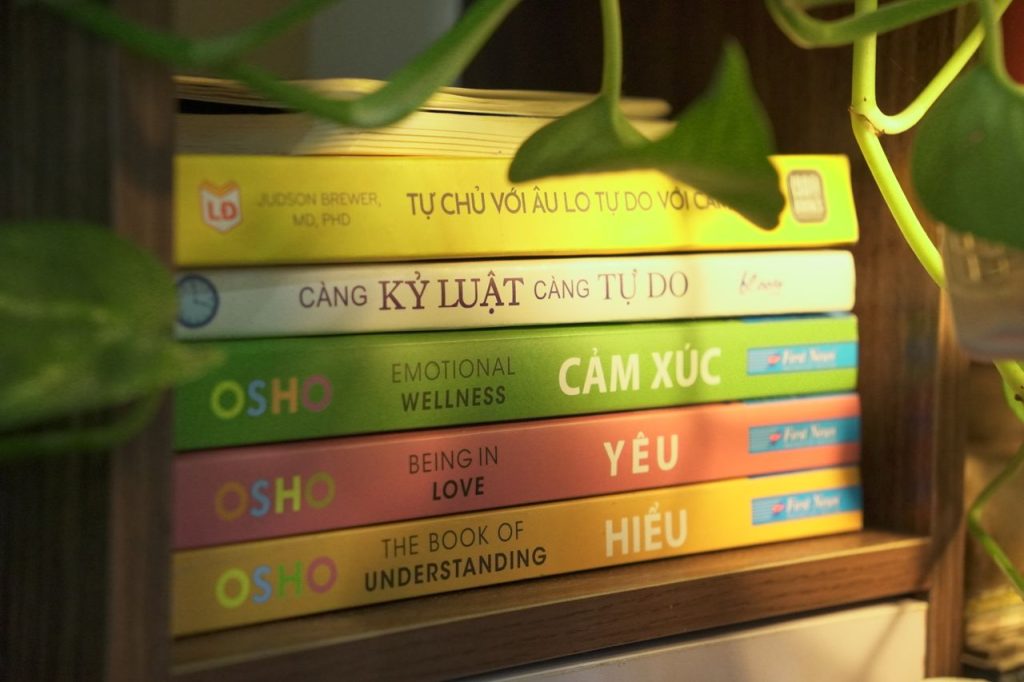
What Makes a Mindfulness Book Worth Reading?
Not every book about mindfulness will be equally useful for every reader.
Some books are highly practical and focus on exercises you can use immediately. Others are more philosophical and explore consciousness, suffering, compassion, or the nature of attention.
Before choosing a book, consider what you actually want from it.
A useful mindfulness book should ideally offer one or more of the following:
- Clear explanations of mindfulness concepts
- Practical meditation exercises
- Guidance for beginners
- Strategies for handling difficult thoughts and emotions
- Realistic advice for incorporating mindfulness into daily life
- Ideas that encourage reflection rather than passive reading
- A perspective that complements your personal goals
The best book is not necessarily the most famous one. It is the one that helps you understand mindfulness and actually practice it.
15 Good Books on Mindfulness to Explore
Below are books that represent different approaches to mindfulness. Some are better suited to beginners, while others may appeal to readers who want deeper philosophical or contemplative perspectives.
1. Wherever You Go, There You Are — Jon Kabat-Zinn
Jon Kabat-Zinn is one of the most influential voices in modern mindfulness practice.
Wherever You Go, There You Are presents mindfulness in an accessible way and explores how awareness can become part of ordinary life.
Rather than treating mindfulness as something you only practice during formal meditation, the book encourages readers to notice the present moment while walking, eating, working, or simply sitting.
Best for: Beginners who want an approachable introduction to everyday mindfulness.
2. Full Catastrophe Living — Jon Kabat-Zinn
For readers who want a more comprehensive exploration, Full Catastrophe Living provides a deeper look at mindfulness-based stress reduction.
The book discusses how mindfulness and meditation can influence the way we relate to stress, discomfort, and challenging experiences.
It can be especially valuable for readers interested in developing a structured mindfulness practice.
Best for: Readers who want an in-depth introduction to mindfulness-based stress reduction.
3. The Miracle of Mindfulness — Thich Nhat Hanh
Thich Nhat Hanh was widely respected for making mindfulness accessible through simple, compassionate teachings.
The Miracle of Mindfulness emphasizes bringing awareness to ordinary activities rather than separating mindfulness from daily life.
Its message is straightforward: everyday moments can become opportunities for awareness.
Best for: People who want a gentle, reflective approach to mindful living.
4. Peace Is Every Step — Thich Nhat Hanh
Another accessible work by Thich Nhat Hanh, Peace Is Every Step, explores how peace and awareness can be cultivated in ordinary circumstances.
The book encourages readers to slow down and recognize moments of presence that are easily overlooked.
For someone who feels that meditation is difficult or overly formal, this perspective can be particularly encouraging.
Best for: Readers interested in bringing mindfulness into everyday routines.
5. Wherever You Go, There You Are: The Mindfulness Meditation in Everyday Life Perspective
Readers looking for practical mindfulness guidance often return to teachings that connect formal meditation with real-world experiences.
The broader lesson is important: mindfulness is not simply about having a perfectly quiet mind. It is about learning to notice what is happening without automatically reacting to it.
That distinction can transform how you approach meditation.
Best for: Anyone trying to understand how meditation connects with daily awareness.
6. Radical Acceptance — Tara Brach
Tara Brach combines mindfulness, psychology, and compassion in a way that can be particularly meaningful for people struggling with self-judgment.
Radical Acceptance explores how resistance, shame, fear, and self-criticism can influence our experience.
Its emphasis on accepting ourselves with greater compassion makes it a useful companion for anyone exploring emotional awareness.
Best for: Readers interested in self-compassion and emotional healing.
7. Real Happiness — Sharon Salzberg
Real Happiness takes a practical approach to meditation and presents exercises that can help readers establish a consistent practice.
Sharon Salzberg is particularly known for her teachings on loving-kindness and compassion.
The book can be helpful if you understand the basic idea of meditation but need a clear structure for practicing regularly.
Best for: Beginners who want practical meditation exercises.
8. The Mindful Way Through Depression — Mark Williams, John Teasdale, Zindel Segal, and Jon Kabat-Zinn
This book introduces concepts associated with mindfulness-based cognitive therapy.
It explores how people can become caught in repetitive patterns of thought and how awareness can change their relationship with those patterns.
Because mental health concerns can be complex, readers should treat books like this as educational resources rather than replacements for professional care.
Best for: Readers interested in the relationship between mindfulness and recurring negative thought patterns.
9. Mindfulness for Beginners — Jon Kabat-Zinn
As the title suggests, this book is designed to make mindfulness easier to understand for people who are just starting.
It provides a foundation for developing awareness and approaching meditation without unnecessary complexity.
Best for: Complete beginners who want a straightforward starting point.
10. The Headspace Guide to Meditation and Mindfulness — Andy Puddicombe
Andy Puddicombe’s work presents meditation in a modern, accessible format.
The book is useful for people who may feel intimidated by traditional meditation terminology and want practical guidance that fits contemporary life.
Best for: Busy beginners who want simple and approachable meditation guidance.
11. 10% Happier — Dan Harris
Dan Harris approaches meditation from a personal and skeptical perspective.
His story can appeal to readers who are curious about mindfulness but uncomfortable with overly spiritual or idealistic descriptions of meditation.
The book demonstrates that you do not need to become a completely different person to benefit from becoming more aware.
Best for: Skeptical readers and people who prefer a modern, conversational approach.
12. The Untethered Soul — Michael A. Singer
This book explores the relationship between thoughts, emotions, and the observing mind.
While it moves beyond strictly practical mindfulness instruction, it encourages readers to examine how they relate to their internal experiences.
Best for: Readers interested in self-awareness and deeper reflection.
13. Wherever You Are — A Practical Reminder to Return to the Present
One of the recurring themes across mindfulness literature is the importance of returning to the present rather than trying to permanently eliminate thoughts.
This is an important distinction.
Mindfulness does not require you to stop thinking. Instead, you learn to notice when your attention has wandered and gently return it to what is happening now.
Best for: Anyone frustrated because meditation has not made their mind completely quiet.
14. The Things You Can See Only When You Slow Down — Haemin Sunim
Haemin Sunim’s writing focuses on slowing down, self-awareness, relationships, and finding balance in an increasingly demanding world.
Its reflective style makes it particularly suitable for readers who enjoy short insights rather than highly technical meditation instructions.
Best for: Readers looking for reflective guidance on slowing down and living more intentionally.
15. The Power of Now — Eckhart Tolle
The Power of Now focuses heavily on present-moment awareness and the relationship between consciousness and thought.
Although it is broader than a traditional mindfulness manual, many readers find its exploration of presence useful when developing greater awareness of their internal experience.
Best for: Readers interested in presence, consciousness, and personal transformation.

How to Choose the Right Mindfulness Book for You
Instead of asking, “What is the best mindfulness book?” ask a more useful question:
What do I want to change or understand?
Your answer can guide your choice.
If You Are Completely New to Mindfulness
Start with an accessible introduction that explains the basics without overwhelming you.
Look for books covering:
- What mindfulness actually means
- Basic breathing meditation
- Body awareness
- Present-moment attention
- Common beginner challenges
- How to establish a regular practice
You do not need to understand every meditation tradition before you begin.
If You Struggle With Stress
Look for resources that explore mindfulness-based stress management.
These books can help you understand how attention, thoughts, physical sensations, and emotional reactions interact.
Pair reading with a short daily breathing practice rather than trying to absorb everything intellectually.
If You Want Greater Self-Awareness
Choose books that explore observing thoughts and emotions without immediately identifying with them.
A useful exercise is to pause when you experience a strong emotion and ask:
“What am I noticing right now?”
Instead of immediately asking why you feel that way, first notice the physical sensations, thoughts, and impulses that accompany the emotion.
If You Want More Compassion
Look for books discussing loving-kindness, self-compassion, acceptance, and emotional awareness.
These approaches can help you develop a less judgmental relationship with yourself and other people.
How to Get More From Your Mindfulness Reading
Reading about mindfulness is not the same as practicing mindfulness.
You can read an entire book and still struggle to remain present during an ordinary conversation.
The solution is to turn reading into practice.
Try this simple approach:
1. Read slowly.
You do not need to finish a chapter every day. One meaningful idea may be enough.
2. Highlight practical exercises.
Mark techniques that you can realistically practice.
3. Choose one idea at a time.
Avoid trying to implement ten new practices simultaneously.
4. Practice immediately.
If a book recommends a five-minute breathing exercise, try it before moving to the next chapter.
5. Keep a mindfulness journal.
Write down what you noticed during practice rather than judging whether you were “good” at meditation.
6. Revisit useful passages.
Mindfulness concepts often become clearer through repeated experience.
A Simple 7-Day Mindfulness Reading Challenge
If you want to turn your reading into action, try this one-week experiment.
Day 1: Read for 10 minutes and identify one idea that stands out.
Day 2: Practice mindful breathing for five minutes.
Day 3: Eat one meal without your phone or television.
Day 4: Take a slow, mindful walk and notice sounds, sensations, and movement.
Day 5: Spend five minutes observing your thoughts without trying to change them.
Day 6: Practice gratitude by identifying three ordinary things you appreciate.
Day 7: Reflect on the week and write down what changed in your awareness.
The goal is not perfection. The goal is learning how mindfulness feels when it becomes part of real life.
Common Mistakes When Reading About Mindfulness
Even with excellent resources, beginners can fall into a few predictable traps.
Trying to Empty Your Mind
A common misconception is that successful meditation means having no thoughts.
Thoughts are normal. The practice is noticing them without automatically following every thought.
Collecting Books Instead of Practicing
Reading ten books will not necessarily create greater mindfulness.
One book combined with consistent practice can be more valuable than an entire shelf of unread or unfinished titles.
Expecting Immediate Results
Mindfulness is a skill that develops through repetition.
Some sessions may feel peaceful. Others may feel distracted, uncomfortable, or boring. None of these experiences automatically means you are doing it wrong.
Turning Mindfulness Into Another Performance
You do not need to meditate perfectly, maintain a perfect streak, or achieve a particular emotional state.
Mindfulness is about awareness, not performance.
Build Your Practice Beyond Books
Books can provide valuable knowledge, but mindfulness becomes most meaningful when it enters your everyday experience.
That might mean taking three conscious breaths before answering an email, noticing your body while walking, listening carefully during a conversation, or recognizing a stressful thought before reacting to it.
At MindfulnessMeditationHub.com, we provide practical resources, exercises, and mindfulness techniques designed to help you explore these practices and incorporate them into daily life.
Whether you are completely new to meditation or have been practicing for years, our resources are designed to support your personal mindfulness journey with approachable, practical guidance.
Final Thoughts
The best mindfulness book is ultimately the one that helps you move from understanding an idea to experiencing it.
If you are searching for good books on mindfulness, begin by identifying your goal. Do you want to learn meditation? Reduce everyday stress? Develop self-awareness? Practice compassion? Create more presence in your relationships?
Once you know what you are looking for, choosing becomes much easier.
Most importantly, remember that mindfulness is not something you master by finishing a book. Reading can open the door, but consistent practice is what allows the lessons to become part of your life.
Explore the mindfulness resources at MindfulnessMeditationHub.com, choose a practice that feels realistic for you, and start with a few intentional minutes today. Small moments of awareness, repeated consistently, can become the foundation for a more mindful way of living.
Related Topics
- Calm Coloring: Simple Mindfulness for Stress Relief
- Teaching Mindfulness: Transform Lives with Simple Practices
- Mindfulness Tip: 10 Simple Habits for a Calmer Mind
- Emotional Mindfulness: Master Your Emotions with Ease
- Mindfulness Journey: Transform Your Life with Inner Peace
- Mindfulness Emotion: Transform Your Emotional Well-Being
- Mindfulness and Stress Management: Your Path to Lasting Calm
- Mindfulness Strategy: Transform Stress Into Lasting Calm
- Mindfulness for Stress and Anxiety: Reclaim Calm Naturally
- What Is Mindfulness Meditation? Unlock Calm, Focus & Joy