
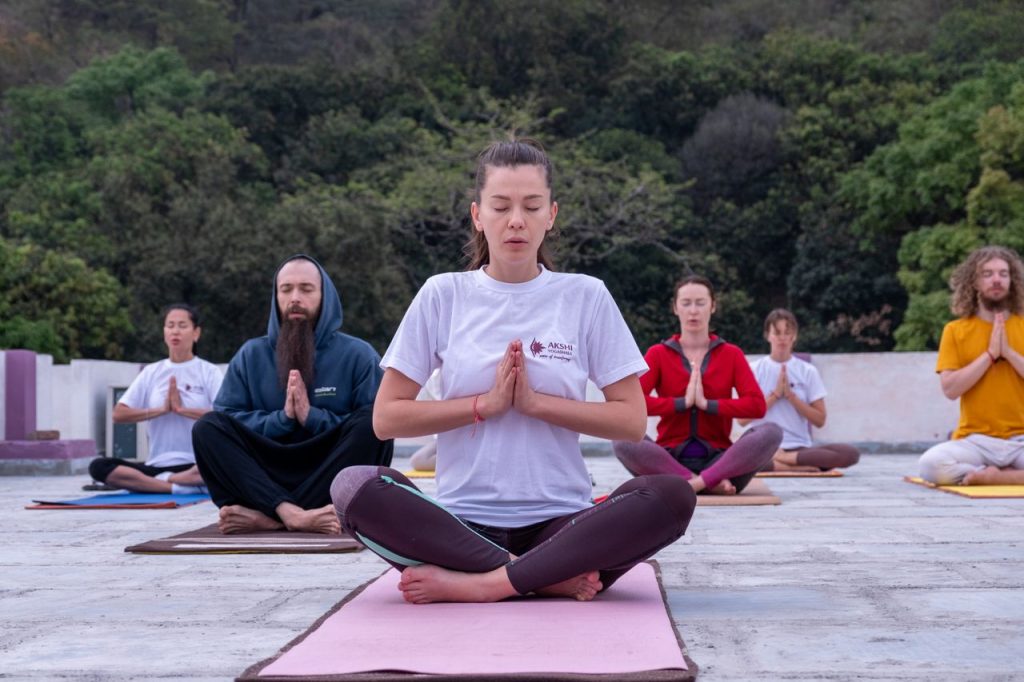
Learn how to choose the right meditation posture for comfort, focus, and calm. Explore sitting, kneeling, chair, and lying-down options for your practice.
Meditation does not require you to sit in one particular way or twist your body into an uncomfortable position. In fact, trying too hard to achieve a “perfect” position can make it harder to relax, focus, and enjoy your practice.
The right meditation posture should help you remain comfortable, alert, and relatively still while allowing your breathing to feel natural. Whether you are completely new to meditation or have practiced for years, understanding how your body should be positioned can make your sessions more sustainable.
At MindfulnessMeditationHub.com, we provide practical resources, exercises, and mindfulness techniques to help you explore meditation and incorporate these practices into everyday life. Whether you are beginning your journey or looking for ways to deepen an established practice, our resources are designed to support your personal mindfulness journey.
Why Your Position Matters During Meditation
Your physical position can influence how easily you maintain attention during a session. If your body is tense, unsupported, or uncomfortable, your attention may repeatedly return to physical discomfort rather than the breath or chosen meditation object.
A good position can encourage:
- Comfortable, steady breathing
- A relaxed but alert state
- Better body awareness
- Fewer unnecessary movements
- Greater concentration
- A more consistent meditation routine
However, comfort does not mean becoming completely relaxed to the point of falling asleep. Meditation generally benefits from a balance between physical ease and mental alertness.
This is why there is no single position that works perfectly for everyone.
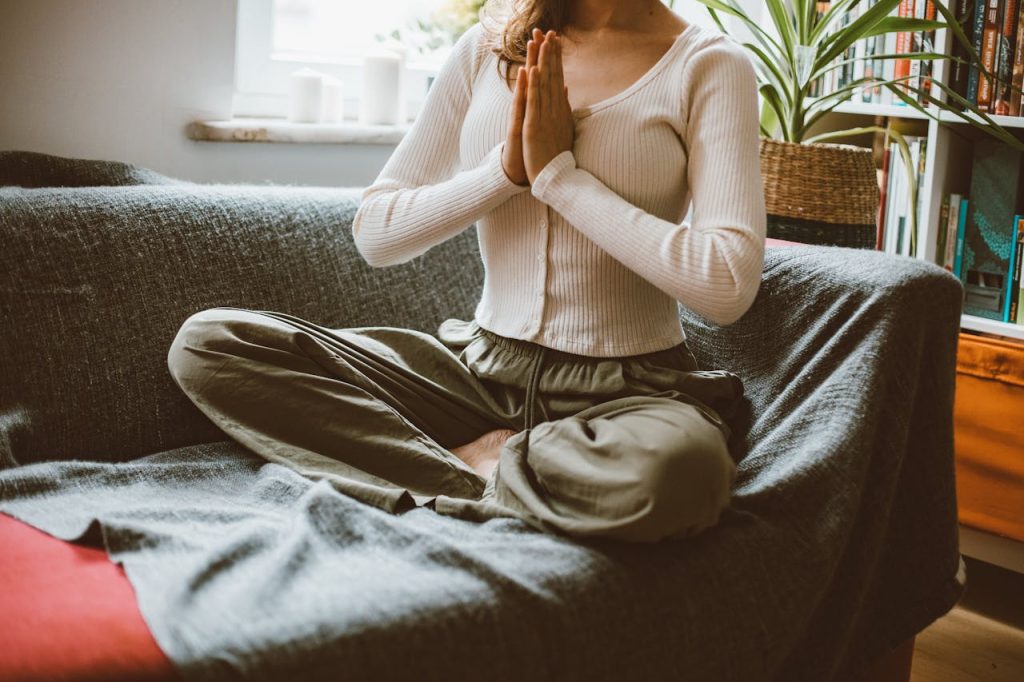
What Makes a Good Meditation Posture?
An effective meditation posture generally has three characteristics: stability, comfort, and alertness.
1. Stable
Your body should feel supported rather than constantly shifting. When your position is stable, you can spend less attention adjusting your body.
2. Comfortable
You should not force your joints, spine, hips, or knees into positions that cause pain. Mild unfamiliarity may happen when trying a new position, but sharp or persistent pain is a signal to adjust.
3. Alert
Your body should be relaxed without becoming completely collapsed. An upright position can make it easier for many people to maintain awareness.
The goal is not to look like someone in a meditation photograph. The goal is to create conditions that support your practice.
The Best Sitting Positions for Meditation
There are several traditional and modern options for seated practice. You can experiment with each and determine which provides the best combination of comfort and stability.
Cross-Legged Sitting
Sitting cross-legged on a cushion is one of the most familiar meditation positions.
Place a cushion or folded blanket underneath your hips. Allow your knees to move naturally toward the floor without forcing them down.
Keep your torso upright and let your hands rest comfortably on your thighs or in your lap.
This position can work particularly well when your hips are reasonably comfortable with sitting on the floor.
Easy Pose
Easy Pose is a simple cross-legged position often used for meditation and breath awareness.
The important point is not how deeply your legs are crossed. Instead, focus on creating a stable base while keeping your upper body relaxed.
If your knees sit significantly higher than your hips, try using a higher cushion. Elevating the hips can sometimes make the position more comfortable.
Half Lotus and Full Lotus
Lotus variations are traditionally associated with meditation practices, but they are not necessary for effective meditation.
These positions require considerable hip mobility. Attempting them without sufficient flexibility can place unnecessary stress on the knees or hips.
If lotus feels uncomfortable, choose another position. There is no requirement to master an advanced seated pose before beginning mindfulness practice.
How to Meditate Comfortably in a Chair
A chair is an excellent option for people who find floor sitting uncomfortable.
Chair meditation can also be useful at work, while traveling, or whenever a floor cushion is unavailable.
Try This Simple Setup
- Sit toward the front or middle of the chair.
- Keep both feet supported by the floor if possible.
- Allow your knees to remain comfortably bent.
- Let your spine lengthen naturally.
- Relax your shoulders.
- Rest your hands on your thighs or lap.
- Keep your head balanced rather than pushing the chin upward or downward.
- Close your eyes or maintain a soft gaze.
You do not need to sit rigidly. Think of your spine as naturally upright rather than artificially straight.
For many beginners, chair meditation removes unnecessary physical challenges and allows them to focus more fully on the practice.
Kneeling Meditation
Kneeling can provide another stable alternative to cross-legged sitting.
A meditation bench, cushion, or folded blanket can provide additional support. Place enough padding underneath your body so that your knees and ankles remain reasonably comfortable.
If you experience discomfort in the knees, hips, or ankles, switch positions rather than trying to endure it.
Meditation is not a flexibility competition.
Can You Meditate While Lying Down?
Yes. Lying down can be an appropriate option, particularly for practices involving body awareness, relaxation, or mindful rest.
A common approach is to lie comfortably on your back with your arms resting naturally and your legs positioned in a relaxed way.
The primary challenge is alertness. Because lying down is strongly associated with sleep, some people may become drowsy.
If your intention is focused meditation rather than sleep, you may find sitting more effective.
However, if sitting causes significant discomfort, lying down may be a practical alternative.
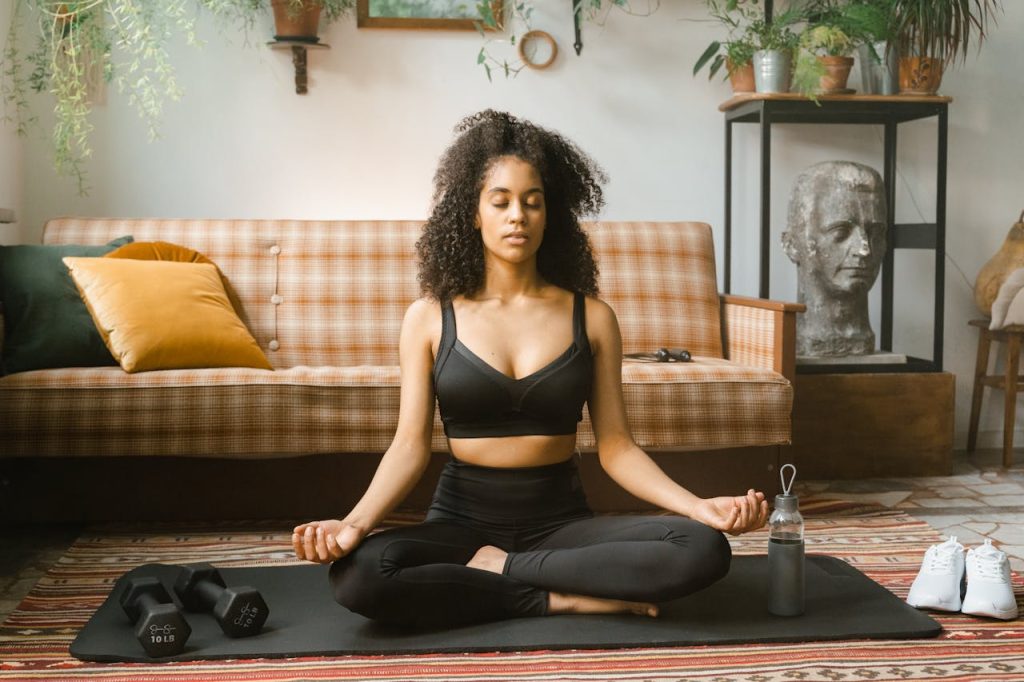
How to Adjust Your Spine
One of the most important aspects of seated practice is finding a natural spinal position.
Avoid deliberately forcing your back into an exaggerated “perfect” straight line.
Instead, imagine that the crown of your head is gently extending upward while your shoulders remain relaxed.
Your posture might look like this:
- Head balanced over the shoulders
- Chin slightly relaxed
- Shoulders away from the ears
- Chest open without being pushed forward
- Spine naturally elongated
- Pelvis comfortably supported
This approach creates a sense of uprightness without unnecessary muscular tension.
What Should Your Hands Do?
There is no universal hand position that you must use.
You can simply place your hands on your thighs with your palms facing downward or upward. You can also rest one hand over the other in your lap.
Traditional meditation practices may use specific hand gestures, sometimes called mudras. These can be meaningful within particular traditions, but beginners do not need complicated hand positions to meditate effectively.
Choose the position that allows your arms and shoulders to remain relaxed.
Where Should Your Eyes Be?
Your eyes can be closed, partially closed, or softly focused on a stationary point.
Closing your eyes may reduce visual distractions. However, some people become sleepy when their eyes are closed.
A soft downward gaze can provide an alternative.
Experiment with both approaches. The best choice is the one that supports awareness without creating unnecessary tension.
7 Practical Tips for a Better Meditation Position
1. Start With Support
If you are sitting on the floor, use a cushion, folded blanket, or meditation bench if needed.
Support is not a sign that you are doing something incorrectly. It can make longer sessions considerably more manageable.
2. Keep Your Body Relaxed
Check your shoulders, jaw, forehead, and hands.
Many people unknowingly hold tension in these areas. Take a moment to soften them before beginning.
3. Avoid Forcing Flexibility
You do not need flexible hips or legs to meditate.
If a position causes pain, change it. Consistency matters more than copying a traditional pose exactly.
4. Find a Stable Base
Your body should feel grounded.
When sitting, notice the points where your body contacts the cushion, floor, or chair. This physical stability can become an anchor for mindful awareness.
5. Let Your Breathing Be Natural
You generally do not need to manipulate every breath.
Instead, notice the natural movement of breathing and allow it to become part of your meditation practice.
6. Make Small Adjustments
If you notice discomfort, make a deliberate, gentle adjustment rather than repeatedly fidgeting.
For example, if your foot is uncomfortable, slowly reposition it and return your attention to the practice.
7. Practice Consistently
Even a comfortable position will not transform your meditation practice overnight.
Start with a manageable amount of time and gradually build consistency.
Common Mistakes Beginners Make
Understanding what not to do can be just as useful as learning the basics.
Trying to Look Like a Meditation Expert
Pictures often show people sitting in advanced poses. That does not mean those positions are necessary.
Choose function over appearance.
Sitting Too Rigidly
An upright spine does not mean a stiff body.
If your shoulders are raised and your muscles are constantly working to hold you in place, gently release unnecessary tension.
Ignoring Pain
Discomfort and pain are not the same thing.
A little adjustment may be normal when developing a new habit, but persistent or sharp pain should not be treated as something you simply need to tolerate.
Changing Positions Constantly
Some movement is natural. However, constantly searching for a “perfect” position can become another distraction.
Once you find a reasonably comfortable setup, give yourself time to settle.
Believing There Is Only One Correct Position
Meditation traditions have developed many different approaches.
Your physical needs, environment, experience level, and purpose all matter.
A Simple 10-Minute Practice
Once you have chosen a comfortable meditation posture, try this simple routine.
Minute 1: Settle
Notice the points where your body meets the chair, cushion, or floor.
Allow your shoulders and jaw to soften.
Minutes 2–4: Notice the Breath
Bring attention to the natural rhythm of breathing.
You do not need to change the breath. Simply notice it.
Minutes 5–7: Expand Awareness
Notice sensations throughout your body.
You might observe warmth, pressure, movement, tightness, or relaxation without immediately trying to change anything.
Minutes 8–9: Notice Your Thoughts
Thoughts will naturally appear.
Instead of fighting them, notice that thinking has occurred and gently return your attention to your chosen focus.
Minute 10: Close
Before opening your eyes or returning to your activities, notice how your body and mind feel.
There is no need to judge whether the session was “good” or “bad.”
The practice itself is the experience.
How to Choose the Right Position for You
Your ideal setup may depend on your body and your circumstances.
Consider these questions:
Do you experience discomfort sitting on the floor?
Try a chair or additional support.
Do you become sleepy while lying down?
Try a seated position.
Do your knees feel strained in cross-legged positions?
Change positions rather than forcing your legs.
Do you struggle to stay upright?
A supportive chair may be a practical starting point.
Are you practicing for only a few minutes?
A simple chair or cushion may be all you need.
Are you practicing for longer periods?
Pay particular attention to support and pressure points.
The best setup is one that makes regular practice easier rather than creating another obstacle.
Meditation Is More Than Physical Position
Although physical alignment matters, meditation ultimately involves attention and awareness.
You can have a textbook-perfect seated position while your mind is completely distracted. Conversely, you can practice effectively in a simple chair while developing greater awareness of your thoughts, sensations, and surroundings.
That is why it is useful to think of physical positioning as a support for meditation, rather than meditation itself.
The body provides a foundation. Your attention is what you practice.
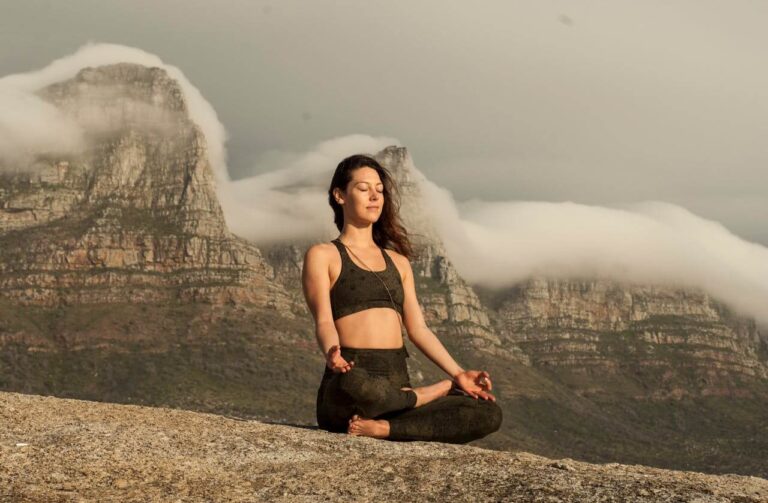
Build Your Practice With Mindfulness Meditation Hub
Finding a comfortable meditation posture is only one part of developing a meaningful mindfulness routine.
At MindfulnessMeditationHub.com, our goal is to make mindfulness and meditation more approachable through practical resources, exercises, techniques, and educational guidance.
Whether you are learning the fundamentals, experimenting with different meditation techniques, exploring mindful living, or looking for ways to make practice part of your daily routine, you can use our resources to continue developing your personal practice.
Start with what feels manageable. Explore different techniques. Pay attention to your experience. Most importantly, give yourself permission to learn gradually.
Related Topics
- Calm Coloring: Simple Mindfulness for Stress Relief
- Teaching Mindfulness: Transform Lives with Simple Practices
- Mindfulness Tip: 10 Simple Habits for a Calmer Mind
- Emotional Mindfulness: Master Your Emotions with Ease
- Mindfulness Journey: Transform Your Life with Inner Peace
- Mindfulness Emotion: Transform Your Emotional Well-Being
- Mindfulness and Stress Management: Your Path to Lasting Calm
- Mindfulness Strategy: Transform Stress Into Lasting Calm
- Mindfulness for Stress and Anxiety: Reclaim Calm Naturally
- What Is Mindfulness Meditation? Unlock Calm, Focus & Joy