
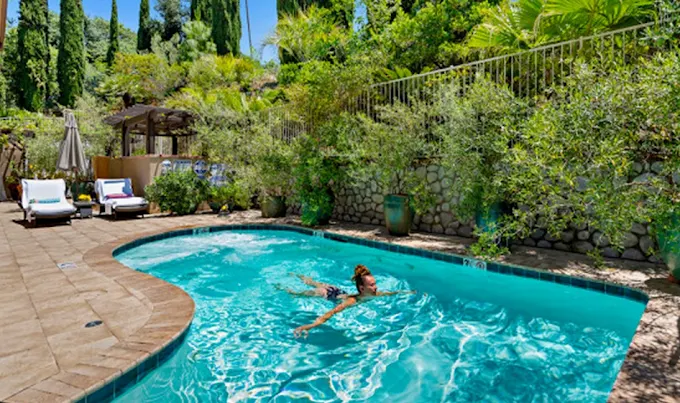
Discover how pool meditation can calm your mind, reduce stress, and deepen mindfulness with simple techniques you can safely practice in water.
Water has a unique ability to change how we feel. The gentle movement, quiet surroundings, and sensation of being supported can make it easier to slow down and turn our attention inward. For many people, combining meditation with time in the water creates a peaceful opportunity to step away from everyday distractions.
Pool meditation is a simple mindfulness practice that uses the calming environment of a swimming pool to support relaxation, awareness, and mental clarity. You do not need years of meditation experience, special equipment, or complicated techniques to begin. With the right approach, a few quiet minutes can become a meaningful part of your mindfulness routine.
At MindfulnessMeditationHub.com, we provide practical resources, exercises, and mindfulness techniques to help you explore these practices and incorporate them into your daily life. Whether you’re completely new to meditation or have been practicing for years, our goal is to provide useful guidance that supports your personal mindfulness journey.
What Is Pool Meditation?
At its simplest, pool meditation involves practicing mindful awareness while sitting near, standing in, or safely floating in a swimming pool.
The goal is not to achieve a particular mental state. Instead, you intentionally bring your attention to the present moment. You might focus on your breathing, the sensation of water against your skin, the movement of your body, or the sounds around you.
Unlike traditional seated meditation, water introduces an additional sensory element. The temperature, buoyancy, sounds, and gentle movement of the water can give your attention something tangible to connect with.
For some people, this makes mindfulness feel more natural and engaging.
However, meditation in or around water should always prioritize safety. Never practice while swimming alone, and never allow meditation to interfere with your ability to remain alert to your surroundings.
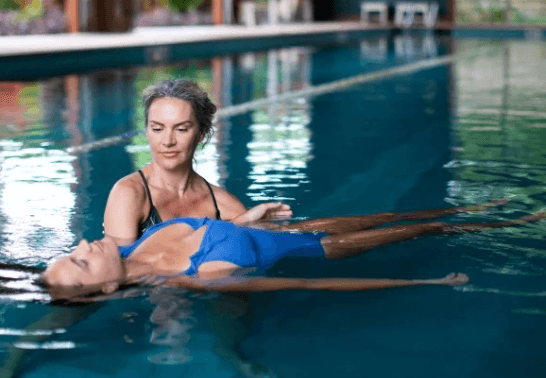
Why Water Can Support Mindfulness
Water has long been associated with relaxation and reflection. Think about how different you may feel when sitting beside a lake, listening to rain, or watching ocean waves compared with sitting in a busy room.
A pool can provide a similar sensory environment in a controlled setting.
1. It Encourages Sensory Awareness
Mindfulness is largely about noticing what is happening right now. Water provides plenty of sensations to observe.
You can notice:
- The temperature of the water
- The sensation of water against your hands
- Gentle ripples around your body
- The sound of moving water
- The rhythm of your breathing
- The feeling of your feet touching the pool floor
Rather than trying to block out sensations, simply observe them without judging them as good or bad.
2. It Can Help You Slow Down
Modern life often encourages constant activity. Notifications, work responsibilities, conversations, and entertainment can keep your attention moving from one thing to another.
A quiet period beside a pool can create a natural transition between activity and rest.
By intentionally slowing your breathing and observing your surroundings, you can create a mental pause.
3. It Adds a Physical Dimension to Meditation
Some people find traditional meditation difficult because sitting still feels uncomfortable or distracting.
Mindful movement or water-based awareness can provide another option.
The physical sensations associated with water can help anchor attention in the present moment. Instead of repeatedly wondering whether you’re “doing meditation correctly,” you have a simple task: notice what you are experiencing.
How to Practice Pool Meditation Safely
Before beginning, safety should come first.
If you are practicing in a pool, choose an environment where you can remain physically secure. Avoid meditating in deep water if you are alone or if closing your eyes would prevent you from recognizing potential hazards.
A safer approach for beginners is to sit comfortably on the pool edge, remain in shallow water where you can stand securely, or practice beside the pool.
If you have a medical condition, mobility concern, or any issue that could affect your safety around water, speak with an appropriate healthcare professional before changing your routine.
A Simple 10-Minute Pool Meditation
You don’t need a long session to benefit from mindful awareness. Try this beginner-friendly routine.
Step 1: Choose Your Setting
Find a relatively quiet time when you are unlikely to be interrupted.
If possible, reduce unnecessary noise and put your phone away. You don’t need complete silence, though. Background sounds can become part of the mindfulness exercise.
Step 2: Get Comfortable
Sit securely at the edge of the pool or choose another safe position.
Relax your shoulders and allow your hands to rest naturally.
There is no need to force yourself into a particular posture. Comfort and safety matter more than achieving a perfect meditation position.
Step 3: Begin With Your Breath
Take a few natural breaths.
Don’t try to breathe in an exaggerated way. Simply notice the process.
Pay attention to:
- The air entering your nose
- Your chest or abdomen moving
- The sensation of breathing out
- The brief pause between breaths
When your mind wanders, gently return your attention to breathing.
Step 4: Notice the Water
Bring your attention to the water.
If your feet or hands are touching it, notice the physical sensation. Observe the temperature, pressure, movement, and texture.
You don’t have to describe these sensations mentally. Simply experience them.
Step 5: Expand Your Awareness
After several minutes, allow your awareness to include the entire environment.
Notice sounds, light, movement, temperature, and your body’s position.
If a thought appears, acknowledge it without following it.
For example, you might silently recognize:
“I’m thinking about work.”
Then return your attention to your breath or the sensations around you.
Step 6: End Gradually
When your session is finished, don’t immediately jump into your next task.
Take one or two slower breaths. Notice how your body feels compared with when you started.
Then calmly return to your day.
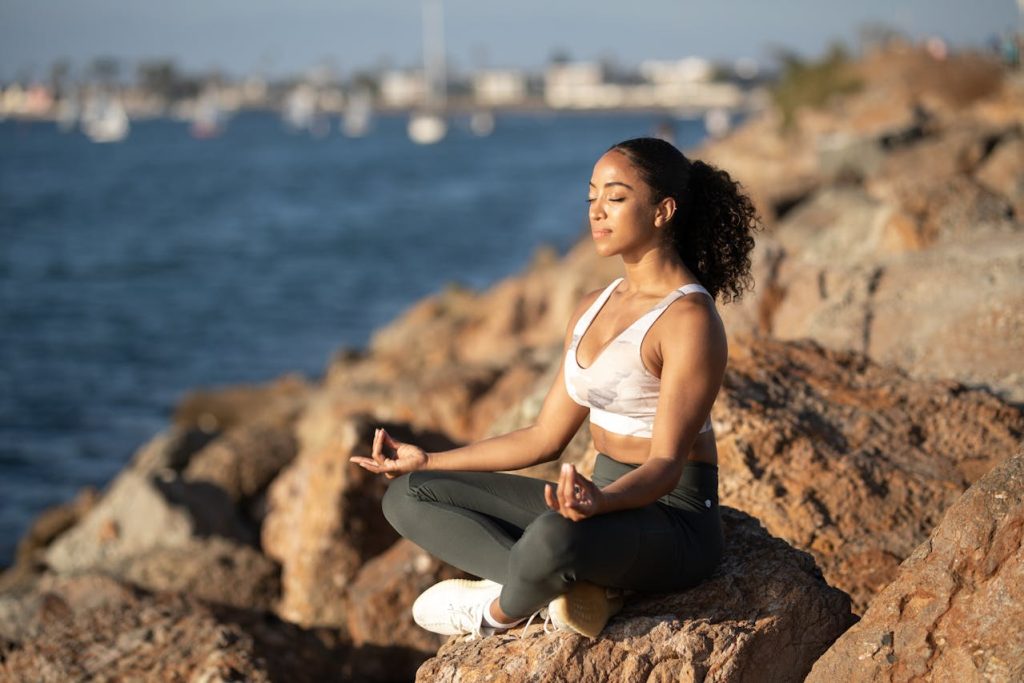
Using the Senses as Meditation Anchors
One of the most useful aspects of water-based mindfulness is the number of sensory anchors available.
A sensory anchor is something you deliberately use to bring your attention back to the present moment.
In a pool setting, you could choose:
Touch: Notice the sensation of water against your skin.
Sound: Listen to splashing, water movement, or surrounding sounds.
Sight: Observe reflections, ripples, shadows, or changing light.
Breathing: Follow the natural rhythm of inhaling and exhaling.
You don’t have to use all of these simultaneously. In fact, focusing on one sense at a time can make the exercise easier for beginners.
Pool Meditation for Stress and Mental Overload
When you’re overwhelmed, trying to “stop thinking” usually isn’t helpful.
Mindfulness takes a different approach.
Instead of fighting thoughts, you learn to notice them without automatically reacting to them.
For example, imagine you’ve had a stressful workday. Your mind keeps replaying a difficult conversation. During your practice, that thought appears again.
Rather than becoming frustrated, you can acknowledge it:
“I’m thinking about that conversation again.”
Then gently redirect your attention toward your breathing or the feeling of water.
The thought may return several times. That’s completely normal.
The practice isn’t about having a completely empty mind. It’s about developing the ability to notice where your attention has gone and intentionally bring it back.
A Pool-Based Body Scan Exercise
A body scan is another useful mindfulness technique.
Begin in a safe, comfortable position and bring your attention gradually through different areas of your body.
Start with your feet.
Notice whether they feel warm, cool, relaxed, tense, heavy, or light.
Move your awareness toward your calves, knees, thighs, hips, abdomen, chest, shoulders, arms, hands, neck, and face.
You don’t need to change any sensation.
Simply notice.
This exercise can help develop greater awareness of physical sensations and may be particularly useful when you feel disconnected from your body after a busy day.
Common Mistakes Beginners Make
Meditation is simple, but beginners often create unnecessary pressure around it.
Here are some common mistakes to avoid.
Trying to Clear Your Mind
Your mind will produce thoughts. That’s what minds do.
Success doesn’t mean eliminating thoughts. It means noticing them and returning your attention to the present.
Expecting Immediate Results
One session may feel relaxing, while another may feel restless.
That’s normal.
Think of mindfulness as a skill that develops through consistent practice rather than a switch you turn on instantly.
Focusing Too Much on Technique
There is no need to obsess over having the perfect posture, breathing pattern, or environment.
Start with something simple and sustainable.
Ignoring Water Safety
Relaxation should never come at the expense of awareness of physical surroundings.
Avoid practicing alone in situations where you could become vulnerable. Keep children supervised, remain aware of your environment, and follow the pool’s safety rules.
How to Make the Practice a Regular Habit
Consistency matters more than duration.
Instead of promising yourself that you’ll meditate for an hour every day, begin with five or ten minutes.
You might connect your practice to an existing routine:
- After your morning swim
- Before leaving the pool
- During a quiet weekend afternoon
- After a light exercise session
- During an intentional relaxation period
Creating a predictable cue makes it easier to turn mindfulness into a habit.
You can also keep a simple meditation journal. After each session, write down one sentence describing how you felt before and afterward.
Over time, you may begin to recognize patterns in your mood, attention, and daily stress levels.
Pool Meditation vs. Traditional Meditation
| Feature | Pool Meditation | Traditional Meditation |
|---|---|---|
| Environment | Practiced near or safely in a pool, using water as part of the experience | Usually practiced indoors or in a quiet outdoor setting |
| Main Focus | Breath, water sensations, sounds, movement, and present-moment awareness | Breath, thoughts, body sensations, mantra, or guided awareness |
| Sensory Experience | Includes temperature, buoyancy, ripples, and water sounds | Generally relies on fewer external sensory experiences |
| Movement | Can incorporate gentle movement or floating when safely practiced | Usually involves sitting, lying down, walking, or standing |
| Beginner-Friendly | Can be engaging for people who enjoy water and sensory experiences | Accessible almost anywhere with minimal preparation |
| Equipment Needed | A safe pool environment may be helpful | Usually requires no special equipment |
| Safety Considerations | Requires extra attention to water safety and surroundings | Generally has fewer environmental safety concerns |
| Best For | People who find water calming and enjoy experiential mindfulness | People who prefer simplicity, stillness, and flexibility |
| Practice Location | Poolside or in a safely controlled shallow-water setting | Home, meditation room, outdoors, workplace, or other quiet spaces |
| Core Principle | Present-moment awareness supported by the experience of water | Present-moment awareness developed through focused attention and observation |
Can You Practice Without Getting in the Pool?
Absolutely.
You can experience many of the same mindfulness principles from a poolside location.
Sit somewhere safe and comfortable. Watch the surface of the water. Listen to the sounds around you. Notice your breathing and physical sensations.
This can be especially useful if you are uncomfortable in water or simply prefer not to enter the pool.
In fact, mindfulness isn’t dependent on a particular location.
You can practice while sitting at home, walking outdoors, drinking tea, stretching, or completing everyday activities.
The environment may support your attention, but the skill ultimately comes from how you relate to your experience.
Build a Mindfulness Practice That Fits Your Life
The most valuable meditation practice is one you can realistically maintain.
You don’t need to completely redesign your lifestyle. Instead, look for small opportunities to become more present.
Try asking yourself:
- When do I naturally have a few quiet minutes?
- Which environment helps me feel comfortable?
- What sensory experience easily captures my attention?
- Would a short daily practice be easier than a long weekly session?
- What meditation technique feels enjoyable rather than forced?
These questions can help you create a personalized approach.
At MindfulnessMeditationHub.com, we believe mindfulness should be practical and approachable. Our resources are designed to help you explore meditation techniques, mindfulness exercises, and everyday practices at your own pace.
Whether you’re taking your first steps or looking for new ways to deepen an established practice, you can explore different approaches and find the ones that fit your lifestyle.
Final Thoughts
Pool meditation offers a creative way to combine mindfulness with the naturally calming sensory qualities of water. By focusing on your breath, physical sensations, sounds, and surroundings, you can turn a few quiet minutes into an intentional practice of present-moment awareness.
The most important thing is not to chase a perfect meditation experience. Some days will feel peaceful. Others may feel distracted or restless. Both are part of the process.
Start small. Practice safely. Pay attention without judgment. And allow your mindfulness practice to develop gradually.
If you’re ready to explore more practical meditation techniques, mindfulness exercises, and strategies for bringing greater awareness into everyday life, visit MindfulnessMeditationHub.com and continue building a practice that works for you.
Related Topics
- Calm Coloring: Simple Mindfulness for Stress Relief
- Teaching Mindfulness: Transform Lives with Simple Practices
- Mindfulness Tip: 10 Simple Habits for a Calmer Mind
- Emotional Mindfulness: Master Your Emotions with Ease
- Mindfulness Journey: Transform Your Life with Inner Peace
- Mindfulness Emotion: Transform Your Emotional Well-Being
- Mindfulness and Stress Management: Your Path to Lasting Calm
- Mindfulness Strategy: Transform Stress Into Lasting Calm
- Mindfulness for Stress and Anxiety: Reclaim Calm Naturally
- What Is Mindfulness Meditation? Unlock Calm, Focus & Joy